

August 7, 2025

Music and culture are part of each other. Every generation has its own voice and melody, and music becomes a mirror that reflects our values, aesthetics, and identities.

C-pop Memories: the Soundtrack of Post-90s Youth
I’m post-90s. I’m from mainland China. People from my generation grew up listening to C-pop (Chinese pop music). The songs from Jay Chou represent the youth of my generation. He became popular when I was in primary school. You could hear his songs everywhere. One of Jay Chou’s most iconic works, Dong Feng Po (East Wind Breaks), is widely regarded as the founding of the ‘Chinese Style’ in modern C-pop. The song not only topped various music charts but also reshaped mainstream musical aesthetics by reintroducing traditional Chinese culture to a new generation.
The music video (MV) of Dong Feng Po is filled with Chinese-style elements such as window lattices, bridges, flowing water and paper lanterns, creating an old style of Jiangnan, which takes its name from a southern region of China. Musically, the piece integrates traditional Chinese instruments such as the pipa, guzheng and erhu into contemporary pop arrangements.
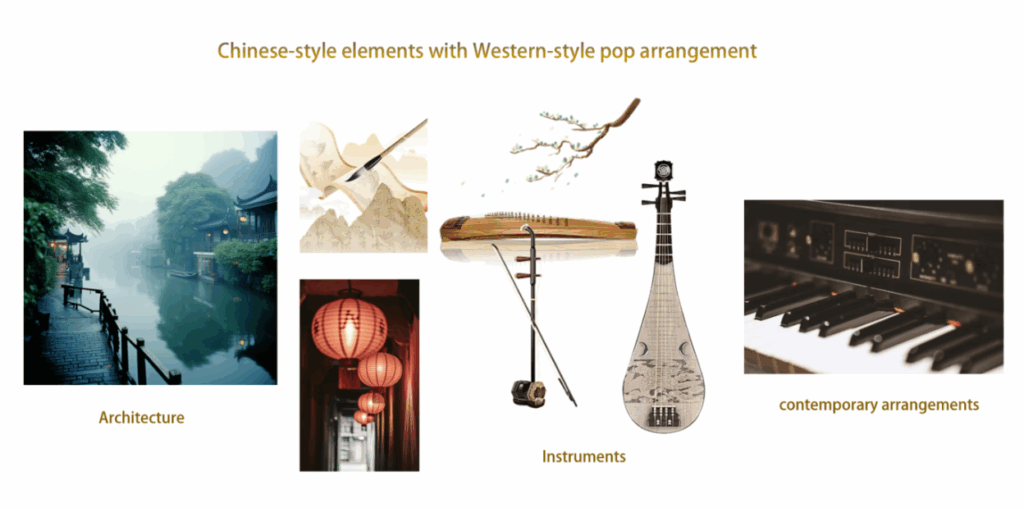
Jay Chou’s unique voice style combined with the freehand lyrics of Vincent Fang can be as perfect: ‘Who is playing a piece of “Dong Feng Po” on the pipa?’ There is not a single line of ancient-style lyrics in the line, but the pipa recreates the classical beauty of the poetry. For many listeners, it opened the door to falling in love with Chinese instruments and ancient poetry.
K-pop and Gen Z: A New Sound for a New Generation
Because of an internship at Cultural Infusion, I began a journey of living in Australia. My colleagues come from all over the world, each with a unique cultural background. But when the conversation turned to music, I noticed an interesting phenomenon: for this generation of young people, K-pop has become their common topic.
Why Are Young People Around the World so Obsessed with K-Pop?

Beyond their attractive appearance and explosive choreography, what truly resonates is the way K-pop lyrics reflect the values of Gen Z. These songs give voice to what today’s young people are feeling. They sing about the pressure of school and jobs, the stress of moving up in society, and the struggle to understand who they are.
Music and Culture: How K-Pop Conveys National Image and Cultural Identity
K-pop not only exports music, but also delivers the elaborated and packaged national culture. The South Korean government has long elevated the cultural industry to a national strategy.
K-pop targets the global market by turning music, idol imagery, and national symbols into cultural exports. As fans follow their stars, they unconsciously connect with K-culture and absorb its values, from learning Korean language to watching dramas, trying Korean food, and copying fashion. K-pop has gone beyond music.
Hidden Influences of K-Pop on Overseas Chinese Teens
However, if you look closer, many K-pop music videos include traditional Chinese elements.
For example, in IVE’s HEYA MV, you can see clear Chinese elements like cloud patterns, coin designs, window lattices, and ink wash art. The most noticeable is a member wearing Chinese knot earrings. VIXX’s Shangri-La stage seems to take inspiration from the Chinese classic Peach Blossom Spring, featuring fan dances, ink-style backgrounds, and Hanfu-inspired costumes. In NCT 127’s Kick It MV, Chinese elements like the character “英雄” (hero) and dragon statues are clearly visible. There are many more examples like this.
Beyond the music industry, Korean cultural borrowing has also appeared in television. The Netflix drama A Killer’s Paradox, for instance, was called out for including Chinese mythology and traditional clothing without proper acknowledgment.
Are these cultural elements being honored or appropriated?
Cultural borrowing has long been a part of human history, and when done respectfully, it can promote understanding and connection between different cultures.
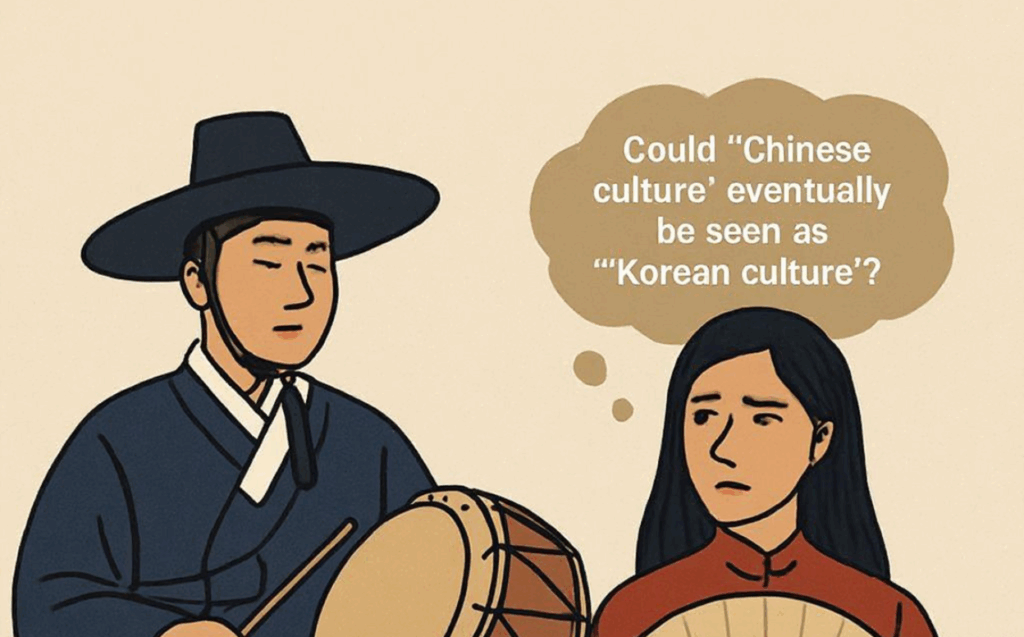
However, for K-pop’s huge overseas fan base, especially teenagers, including second-generation overseas Chinese, K-pop is often their first introduction to what is sometimes called ‘Eastern culture’. When traditional Chinese elements are presented as ‘Korean culture’ in global exports, this subtle cultural appropriation can cause young people to mistake these elements for Korean. This makes me wonder whether it weakens their confidence and connection to their own cultural heritage. If we don’t pay attention to this issue, over time Korea might successfully claim our culture in its heritage bids. As the pages of history turn, could ‘Chinese culture’ eventually be seen as ‘Korean culture’?
Music Is Culture: Finding Ourselves with Music
From C-pop to K-pop, music has influenced the growth of two generations.
For many people in the post-90s generation, Jay Chou’s ‘Dong Feng Po’ offered a first glimpse into the beauty of classical Chinese poetry and traditional instruments. In ‘Herbalist Manual,’ he wove traditional Chinese medicine into lyrics and rhythm, sparking young people’s interest and pride in this cultural heritage.
Today’s Gen Z Chinese diaspora faces new challenges. They live under the pressure to assimilate into mainstream culture while also struggling with identity anxiety caused by a disconnect from their cultural roots.
As K-pop takes the world by storm, how can we reconnect with Chinese culture? Music might be a bridge to a deeper appreciation for some long-forgotten traditions.
Note from the editor: Cultural Infusion encourages open dialogue and the sharing of diverse viewpoints. The opinions expressed here are those of the author and may not fully reflect the views of the organisation. Stay tuned for a response to this piece from a Korean perspective!
About the author:
Share this Post